


Deal or No Deal
4.3135.00 Reviews
App Specs
- Version
- 2.0.13
- Updated On
- License
- Free
- Downloads
- 100,000+
- Developer
- Senior Games
- Categories
- Trivia
- Platform
- Android
Screenshots


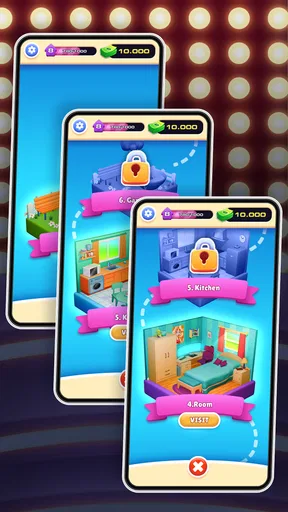
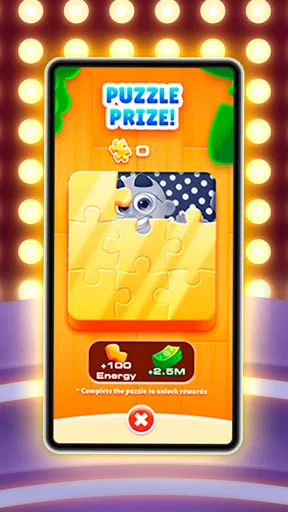
 Analysis by AppCompare
I approached Deal or No Deal as a quick, familiar kind of phone game: choose a case, weigh an offer, and decide whether to stop or keep going. That simple loop is the appeal. It turns a few spare minutes into a small exercise in nerve and judgment, without asking me to learn a complicated set of rules first. The game is free, and its Everyone age rating makes it an easy option to consider for casual play, though its in-app purchases mean I’d still check purchase settings before handing a device to a child.
What makes the format work on a phone is how clearly each round frames the choice. I’m not building a character or mastering a large collection of systems; I’m trying to decide whether the offer feels worth taking in light of the cases still unopened. That makes it a natural fit for a short break, a commute while seated, or a relaxed game shared with someone nearby. It is less suited to anyone looking for deep progression, a long story, or a trivia game built around questions and answers.
A show-like mood, kept compact
The setting does much of the work. Briefcases, stage-style presentation, bright visuals, and a suspenseful musical cue help make each reveal feel like part of a show rather than a plain sequence of taps. I like that the atmosphere supports the central decision instead of requiring a lot of background explanation. Even if you have never followed the television version, the basic tension is easy to read: every reveal changes how attractive the next offer seems.
That presentation also gives the game a particular flavor compared with common mobile trivia titles. A quiz usually asks me to retrieve facts, recognize a correct answer, or improve through repeated knowledge checks. Here, the challenge is mostly about handling uncertainty and deciding when a possible gain is no longer worth the risk. If you want to test what you know, a conventional quiz is the better choice; if you enjoy making a call with incomplete information, this format has a different sort of pull.
How I’d fit a round into the day
I can imagine opening it while waiting for a friend at a café, playing a round together, and taking turns arguing over whether the offer is sensible. That shared debate is a useful way to enjoy the game even when only one person is tapping. For solo play, I’d treat each round as a self-contained diversion rather than expect every session to move toward a bigger goal. The format is strongest when I have a few uninterrupted minutes to follow the offers and reveals; if I need to stop every few seconds, the suspense loses some of its rhythm.
A small practical tip is to decide what kind of player you want to be before an offer appears. If you always intend to chase the biggest possible result, you may keep rejecting deals without thinking through why. If you prefer cautious choices, it can be more satisfying to set a personal stopping point and see whether you stick to it. Neither approach makes the outcome predictable, but having a simple rule gives the decision a little more meaning than tapping on impulse.
The Game Show Experience
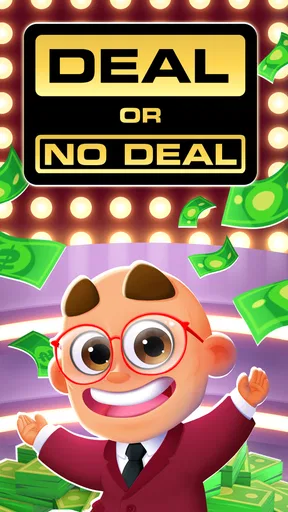
From the moment I launched the app, I was greeted with a jazzy soundtrack and flashy graphics that instantly reminded me of the iconic television show. The app does a stellar job at replicating the show's atmosphere, and as someone who’s watched more episodes than I’d care to admit, I was immediately hooked.
Worth Reading Before You Choose

EA SPORTS FC Mobile 26 Is a Bigger Football Game, but It Takes Time

Flipboard Shows What News Apps Must Do Beyond the Feed

Switching to Android Auto Means Rethinking Your Driving Routine

Google Calendar Makes a Crowded Week Easier to Manage

Ludo King Makes the Most of the Minutes Between Plans

Baby Panda World Brings Quick Play to Modern Phones, but Its Game Library Feels Busy
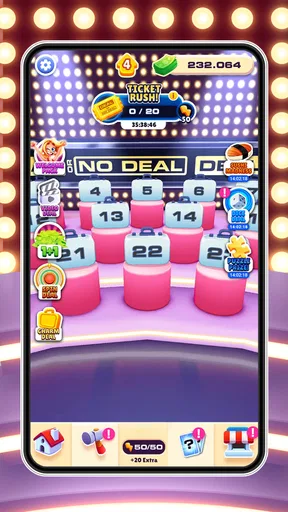
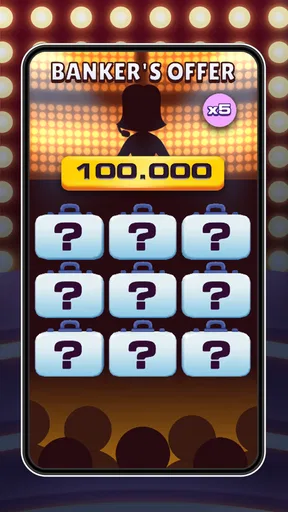
Playing Deal or No Deal is straightforward but utterly engrossing. You start by selecting a briefcase, which you believe holds the highest amount of money. Then, just like the show, you pick other briefcases to eliminate, revealing their cash amounts. The tension builds as the banker makes offers based on your selections. Do you take the deal, or do you press your luck and continue to play? This decision-making process is where the game shines, encapsulating the thrill of risk versus reward.
Visuals and Sound
The graphics are crisp and vibrant, with a user interface that’s easy to navigate. The briefcases pop against the backdrop, and the animations are smooth, making the whole experience visually appealing. The sound effects are spot-on, from the opening of the briefcases to the suspenseful music that plays during the banker’s offer. It’s the little details that really enhance the gaming experience.
The sound and visual cues also help pace a round. A reveal gets a moment of attention, and an offer feels like a pause for judgment rather than just another screen to clear. I find that balance more effective than a rapid-fire tap game, although it can feel slow if I’m only looking for something to play with the sound off and no interest in the show-like build-up. The mood is part of the package, not merely decoration.
Gameplay Mechanics
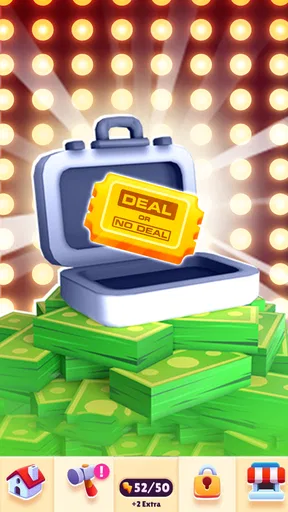
What I genuinely appreciate about this app is how it stays true to the original game show's format while introducing some unique features to keep things interesting. There are various modes to try, including a time-limited challenge that adds an extra layer of excitement. Plus, you can earn in-game currency to unlock new briefcases or power-ups, adding a layer of strategy to your decisions.
For me, the most useful way to approach the banker’s offer is to pause long enough to compare it with what remains possible, rather than treat each offer as a simple yes-or-no reflex. The game’s tension can make an exciting choice feel automatically clever, but a dramatic moment is not the same thing as a good decision. I also wouldn’t assume that an unlocked item or a new briefcase changes the underlying uncertainty; the fun is in making the call with the information the round gives me.
The app doesn’t bombard you with ads, which is a huge plus in my book. While there are in-app purchases available, I found that you can enjoy the game fully without spending a dime, which makes it accessible for everyone.
There is still a difference between a free game and a game with no spending prompts at all. Optional purchases are priced from $0.99 to $20.99 per item, so I’d keep an eye on accidental taps and set a purchase limit if that matters in your household. The game’s basic appeal is the decision at the heart of each round, not paying to make that decision more dramatic. Anyone who dislikes in-app purchase menus or wants a completely purchase-free experience may prefer a simpler offline puzzle or a standard trivia quiz.
Community and Challenges
Another aspect I enjoyed is the community feature. You can connect with friends, compete in challenges, and even participate in global leaderboards. It’s a neat way to add a social dimension to the game, making it more than just a solo experience.
For a low-pressure get-together, the social angle can turn a round into a conversation: one person can argue for taking the offer while another wants to keep opening cases. That works best when everyone is happy to follow the same round and accept that the result is uncertain. If you mainly want a private, quiet game, the core case-and-offer decisions are still the point; competition is an extra reason to return, not a requirement for understanding the game.
The developers have also included daily challenges and events that keep the game fresh and engaging. With regular updates and new content, there’s always a reason to come back and play a few more rounds.
Senior Games is the developer behind this trivia game, and the current version is 2.0.12. It has an average rating of 4.2 from around 2.2 thousand ratings, with over 100 thousand installs. Those figures suggest it has found an audience, but they don’t change the main question for me: do I enjoy suspense built around offers and uncertainty? If yes, its compact rounds are easy to revisit; if I want a steady stream of new facts to learn, I’d choose a question-based quiz instead.
Who will enjoy the tension
I’d recommend it most to people who recognize the game-show premise, enjoy making cautious or daring choices, and want a self-contained round that is easy to explain to someone else. It can also suit families looking for a simple shared activity, with the caveat that purchases should be managed by the device owner. The Everyone rating supports broad accessibility, but the game’s appeal still depends on whether its suspenseful format is entertaining for the person playing.
I’d skip it if I were in the mood for a skill-based contest where practice reliably improves performance, a deep strategy game with many interacting systems, or a quiz that rewards knowledge. The case selection creates drama, but it does not turn the experience into a test of factual expertise. Likewise, someone who finds repeated offers and reveals too slow may get more satisfaction from a quick-match puzzle. Knowing that distinction before downloading helps set fair expectations.
Final Thoughts
Overall, the Deal or No Deal app is a fantastic way to enjoy the iconic game show experience wherever you are. Its combination of faithful adaptation, slick visuals, and engaging gameplay makes it a standout in the world of mobile games. Whether you're a long-time fan of the show or a newcomer curious about the hype, this app is well worth the download.
If you're in the mood for some high-stakes fun and a chance to test your decision-making skills, give Deal or No Deal a try. Just remember, the choice is always yours: deal, or no deal?
My final take is that its strongest feature is the coherent mood: the bright stage-like presentation, case reveals, and offer pauses all serve the same push-and-pull decision. I’d open it when I want light entertainment with a little suspense, not when I need a demanding challenge or a reliable way to sharpen trivia knowledge. Released on December 26, 2024, and available for devices running iOS 7.1 or later, it is an easy game to understand and a more specific one to enjoy: the right fit for fans of show-style risk, but not a universal substitute for quizzes or puzzles.
Pros
- Engaging gameplay with strategic decision-making.
- Authentic feel with real show elements.
- Variety of modes keeps gameplay fresh.
- Simple interface for easy navigation.
- Frequent updates with new content.
Cons
- In-app purchases can be costly.
- Ads interrupt gameplay frequently.
- Limited offline functionality.
- Graphics could be more polished.
- Repetitive sound effects can annoy.
FAQs for Deal or No Deal
What is the main objective of the 'Deal or No Deal' game app?
The primary goal of the 'Deal or No Deal' game app is to test your luck and decision-making skills. Players choose briefcases and eliminate them, hoping to keep high-value cases until the end. The banker offers deals throughout the game, and players must decide whether to accept the deal or continue playing for potentially higher rewards.
Is 'Deal or No Deal' free to play, and are there in-app purchases?
Yes, 'Deal or No Deal' is free to download and play. However, like many apps, it offers in-app purchases. These purchases can enhance the gaming experience by providing additional features, such as extra game modes, or removing ads. Players can enjoy the game without purchases, but these options are available for those who wish to customize their play.
Can I play 'Deal or No Deal' offline, or is an internet connection required?
'Deal or No Deal' generally requires an internet connection, especially for accessing certain features like leaderboards or in-app purchases. However, some basic gameplay may be available offline. It's advisable to check the app’s requirements and permissions in the app store for the most accurate information regarding connectivity needs.
How does the banker’s offer work in the game?
In 'Deal or No Deal', the banker’s offer is a key part of the gameplay. As the game progresses and more briefcases are opened, the banker calculates an offer based on the remaining case values. Players must decide whether to take the offer or continue playing. The offer can vary greatly and is designed to test players' risk tolerance and decision-making skills.
Are there any differences between the Android and iOS versions of 'Deal or No Deal'?
While the core gameplay of 'Deal or No Deal' remains consistent across both Android and iOS platforms, there may be slight differences in user interface or performance due to platform-specific optimizations. Additionally, updates and features might roll out at different times, so it’s useful to check the app details on respective app stores for the latest version information.


